 |
 |
 |
tuition in handmade eyeglasses and jewellery
|
2020-06-29-Mon 4:45:58 |
|
|
|
|
tuition in handmade eyeglasses and jewellery
|
2020-06-29-Mon 4:45:58 |
|
 |
jewellery tuition
Architecture and JewelleryIt seems that the the human body and human scale are central to both architecture and jewellery. A student of architecture at Auckland University visited me and asked if I would be a collaborator for her design thesis.
-----------------------------------------
Maria PMaria arrived with a strong desire to begin learning how to make jewellery. She started individual tuition with custom sessions here at Bush Jewellery Studio. It became a comprehensive study of jewellery-making skills and materials.You won't believe what she was able to do!
-----------------------------------------
Katelyn NelsonKatelyn started individual tuition with a workshop experience plus custom sessions here at Bush Jewellery Studio. A comprehensive study of jewellery-making skills and materials.
Katelyn Nelson article in Craft-Source
-----------------------------------------
Suitable for ages 8 to 17.
KIDS JEWELLERY 2.GEM on a RING Kids Workshop.A time to make something beautiful.
Suitable for ages 8 to 17.
KIDS JEWELLERY 3.SILVER RING Workshop for Kids.
Suitable for ages 7 to 10.
----------------------------------------- PREVIOUS WORKSHOPS.jpg)
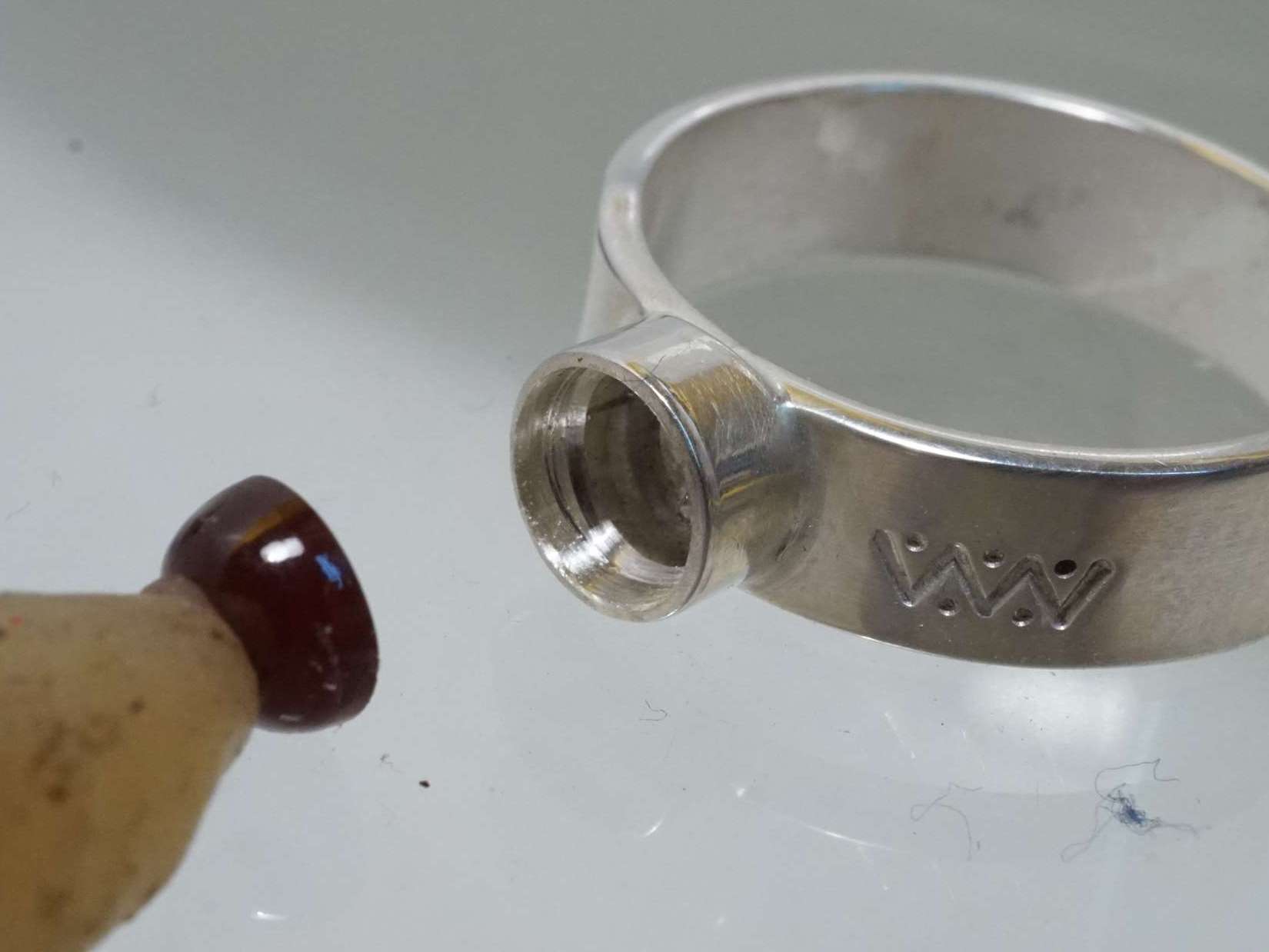
September 2014 - for jewellers, artists, and other adults. 1. Silver ring. Take strip silver and make a decorated ring. You may have time to add a component. If you're fast set a gem on top.
10am to 4:30pm
-----------------------------------------
1. Silver ring. Take strip silver and make a decorated ring. You may have time to add a component. If you're fast set a gem on top.
-----------------------------------------
Learn to have fun with serious tools, and after a bit of work make something fabulous! You get to play with metals like copper, brass and silver, and polish it up shiny. Make something for yourself or for a gift.
-----------------------------------------
Learn to have fun with serious tools, and after a bit of work make something fabulous! You get to play with metals like copper, brass and silver, and polish it up shiny. Make something for yourself or for a gift.
-----------------------------------------
1. Silver ring. Strip silver for a decorated ring. You may have time to add a component. If you're fast set a gem on top.
-----------------------------------------
 generally speakingCustomised tuition allows you to negotiate one or more jewellery sessions to suit you. To make the things that interest you, to learn the processes that will be useful to you, and to learn at a timetable that suits your pace.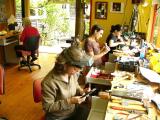
Bush Jewellery studio
teaching emphasisPractical and lateral is my theme. I offer to teach a fairly wide range of jewellery-making processes applying lateral-thinking to tool and equipment use. It's an approach to materials and processes that tends towards the lo-tech and soft-tech, with a good dose of precision on occasion, and always with a strong thread of humour and fun.My teaching is based on a variety of subject areas module subjects listed here, primarily oriented to materials and processes. It's a firm belief of mine that we can be more usefully creative once we have some understanding of the ways and things we manipulate. I break my own rules sometimes when I'm experimenting; but I believe I can when the creativity is based at least on some basic practical understanding. More information about jewellery module subjects, and tuition fees. A word about jewellery teaching worldwide: skills have been slowly dismantled or watered down from the curriculum. People refer to a de-skilling happening. There is a concern that the basic skills - techniques and processes, an understanding of materials - were being eroded in order to give preference to 'idea' and conceptual creativity. An inquisitiveness of and creativity in processes and materials seems not to be encouraged. The impetus has been coming from those who want jewellery to become a fine art and lose the trappings of a fine craft, and of course the trend is supported by the schools' budgeting administration. Jewellery has a fascination for people, and it's related to something tangible. I love teaching people, from children to professionals, using the simplest of tools, and watching them get real enjoyment from feeling some physical understanding of jewellery work and making new things.
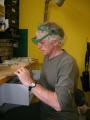
Brian Adam Small class sizes mean you get a high proportion of tutor time, and careful supervision every time you need it. It also means the overall tuition time is shorter than weekly classes. The tuition could be for a single session or a series of days. Single sessions are generally tuition only, while a series timetable of sessions may include studio time as well.
Schedule your tuition for any time of the
year. Generally I have to say I prefer weekdays, but I can be
persuaded to operate weekends - even during holidays.
some studio views   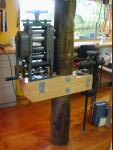 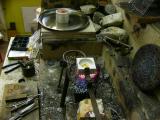  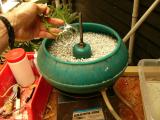 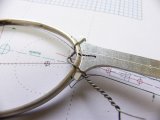
|
individual tuitionTuition is student-centred in that you make a choice of the available modules, we discuss variations or initiate new ones, and I deliver instruction at your level and at your pace. I undertake to facilitate your learning according to your stated aims. I'm flexible enough to adapt my modules to your requirements, and to invent new ones when necessary. I'll regularly check with you to make sure we're keeping to your overall objective.
photos. 
I'll document your progress on camera and send them to you via wetransfer.com.
It'll be a valuable reminder of your time here.
studio timeThis may be scheduled after individual teaching sessions and would be useful for you in order to practice newly learned processes, work on your own projects, or any other related studio work. Studio time is an optional extra to individual tuition. For safety reasons, the studio access during self-directed time is naturally dependant on your demonstrated skill level.
evaluationAfter each period of studio time or first thing next day I'll conduct a 15 minute evaluation to monitor your progress against the teaching modules and to check it against your overall aims.
Craft holiday. If you're from a long way away, your
time in New Zealand will be a vacation as well.
More information about jewellery module subjects, and tuition fees. |
soft technology'soft-tech' in this context is about hand making processes that are small scale, relatively inexpensive, and localized.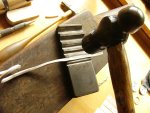
steel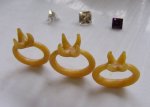
bees-wax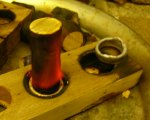
wood
fire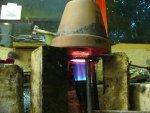
flowerpot 'kiln'
manual burnout kiln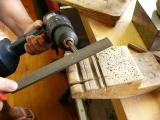
drill_as_lathe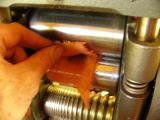
roller printing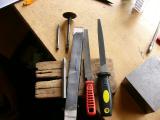
steel tools from auto parts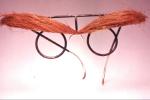
'Flybrows' frame no 250 1991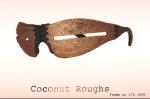
'Coconut Roughs' frame no 167 1986experimentationNew work can emerge through hands-on direct experimentation with materials and processes, especially with a wholesome respect for the materials and a keen observation of the effects of what you're doing.group tuitionWorkshops are periodically held at Bush Jewellery studio. Class sizes are usually limited to 6 and tuition is more general in teaching focus with less individual tutor-time per student. They are a way to study with the company of other students and to help reduce the cost of tuition.
Saturdays
advanced soldering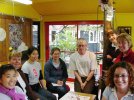
lo-tech casting
nights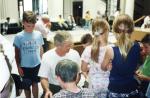
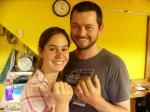
jewellery for childrenWedding RingsThe Wedding Ring Experience gives you the opportunity to make your own wedding bands by hand and to make them together. You might even like to make each other's ring, which would show special trust!This is unique as a wedding ring experience because rather than playing a passive role as trained jewellers make your rings, here at Bush Jewellery Studio you will take the tools and with 'hand technology' you will make your own rings from scratch. There will be plenty of scope for you to apply your own touch and for each of you to make a truly unique ring. In this workshop your rings will be cut, shaped and finished by you.
make your own wedding rings from scratchThe gold.You'll start with NZ-sourced gold in the form of pure 24 karat granules or 22k, 18k, 14k, 10k, or 9k gold strip. If you want to recycle any suitable gold jewellery we can mix the gold alloys here to boost the gold we buy in. The time required. I estimate you'll need at least 4 hours to complete the Wedding Ring experience. How long you will actually need to make your rings depends of many things, and each couple can be different. I've had couples do their rings in 4 hours, but if you do run over time I'll ask you to buy extra hour or two. The ring-making methods The hand-technology you will use are considered to be simple and most effective: hammering textures and symbols, bending and melting, sand casting, forging. I will facilitate and be there to assist the whole time and will check things are going your way. You may even request that I do some things if they're too tricky for you. Two types of ring-making methods are offered, and depending on your ring design ideas I'll suggest you use one or the other. Each offers different possibilities. They are: Method 1. Fabrication. You start making the rings from a flat bar which you forge and hammer into shape while flat (which offers more texturing possibilities), and then you round the flat bar up into a ring and braze the join. Further finishing will be required to clean up the join, and give the gold the surface finish you want. Method 2. Forging. With this method you make a ring shape with jewellers wax and we make it into a ring-shaped ingot using sand-casting. Then you forge this one-piece ingot/ring to shape and to your size. Often people like to leave the hammer marks visible, so your shiny hammer marks become the surface finish. Photos I'll record your journey as you make the rings, and present you with the images on a CD or through a file-sharing place like DropBox. It's a nice reminder for you, and also a way to prove to any incredulous friends that yes you really did take a hammer to the gold! The cost. The Wedding Ring Experience with Brian Adam at Bush Jewellery Studio will cost a set fee plus the wholesale cost of the gold.
What will the gold cost? I supply gold to you at wholesale cost so that it will be an less expensive cost to you.
What happens next?
Many people simply turn up on the day and get right into it.
|
module subjectsChoose what you do with help from some of my regular teaching modules:* the finger ring
ring making (1hr silver ring)
soldering (fluxes, heat control, binding)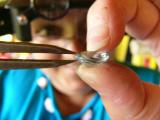
setting stones, organic shapes
a gold ring ingot
forging the gold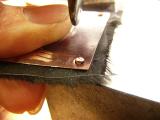
cold joins
lo-tech casting (sand, cuttlefish)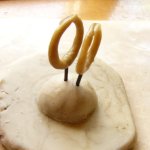
investment casting (modeling wax)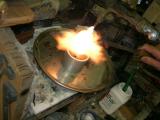
casting
cast toy shapes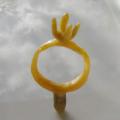
wax modelling
silver casting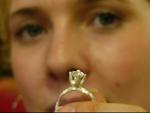
gem setting
fold forming
cnc preparation (computer controlled milling)
practical alloying (gold, silver, copper)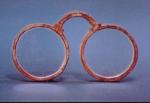
eyeglass history - leather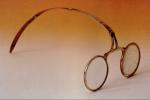
wig glasses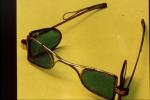
Richardson design
'Aga Khan' sunglass frame no 277 1984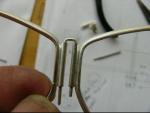
eyeglass frame-buildingA special interest of mine is eyeglass frame building for prescription spectacles or sunglasses by hand-technology common to the jewellery craft industry. This involves designing and making one functioning frame or parts of a frame in a variety of optional solutions. Optical industry trade findings may be used (German or Italian brands) or totally hand-build alternatives constructed. Frame or eyewire will be fitted with demonstration (plano) lenses in a manner that conforms to the lens-fitting requirements of the optical industry. Fitting prescription lenses will be discussed so that the optometrist who will provide the prescription lenses will not be unpleasantly surprised.
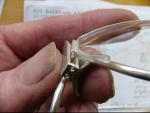
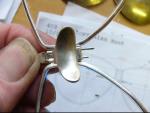

'Aviator Replica' frame no 409 2004
eyeglass designing
'Tonto' sunglass frame c. 1984an eyeglass intensive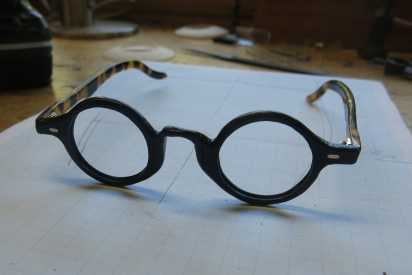
This acetate frame was made by a student from USA and made in a very
fast and intensive workshop, a series of days at Bush Jewellery.
He was accommodated in the self-contained room above the studio.
|
|
|
Brian Adam
|
www.adam.co.nz/workshops |
Auckland, New Zealand |
.png)
.jpg)
.jpg)


.jpg)
.jpg)
.jpg)
.jpg)